
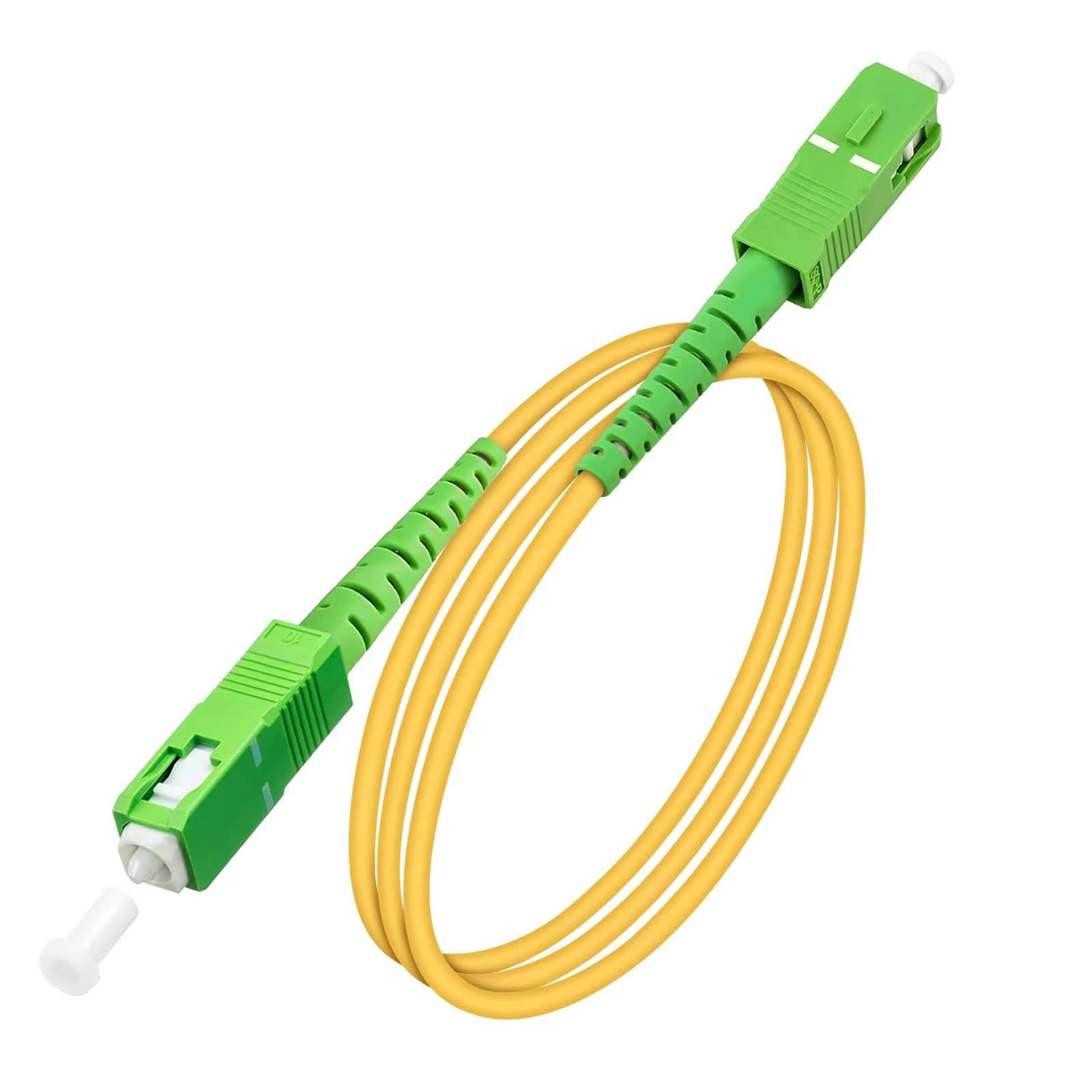
Why a Patch Cord Can Fail After Repeated Use
A breakage report is a failure symptom, not yet a complete specification. The failure may involve the cable jacket, the 250 um or 900 um fiber construction, the reinforcement, the connector boot, the strain-relief transition, an excessive bend or a side load during mating and routing. Record where the failure occurs and under what handling condition before changing the design.
For a project using a 2 mm LSZH cable with aramid reinforcement, those values should be written as buyer requirements and verified in the offered drawing or test evidence. They should not be presented as universal requirements for every SC/APC patch cord.
RFQ Fields That Make the Failure Review Testable
| Field | What to define | Why it matters |
|---|---|---|
| Connector interface | SC/APC or SC/UPC, both ends or hybrid ends, mating adapter and equipment port. | Prevents interface or polish mismatch and an incorrect mating procedure. |
| Fiber and cable | Single-mode or multimode, 250 um, 900 um, 2 mm, 3 mm or another confirmed construction. | Controls the compatible connector body, bend handling and routing space. |
| Jacket and reinforcement | LSZH, PE, PVC or project-defined material; aramid or another approved reinforcement system. | Connects the material choice to the actual handling and environment. |
| Strain relief | Boot length, transition design, pulling or side-load limits and minimum bend radius. | Many field failures occur at the connector-to-cable transition rather than the optical core. |
| Endurance target | Mating-cycle count, mating method, load, inspection point and pass-fail criteria. | A number without a method cannot support a controlled acceptance decision. |
| Evidence | Drawing, material description, optical test records, mechanical test report and packing controls. | Allows offers to be compared without relying on an unverified durability claim. |
Repeated Mating Cycles Need a Named Test
If a buyer requires 500 connections or another endurance target, state whether the test means repeated mating and unmating with a defined adapter, a cable flex cycle, a pull condition or another procedure. Define the sample, load, number of cycles, optical limits, visible-damage limit and final inspection. “500 connections” by itself is not a complete standard or a guarantee for every assembly.
Connector and polish
Confirm SC/APC or SC/UPC against the installed adapter and network requirement. Do not select by housing color alone.
Routing and bend
State the minimum bend radius, cable path, service loop and whether the assembly is moved during maintenance.
Strain relief
Describe boot, pulling-eye, clamp or other handling conditions. A patch cord is not automatically suitable for pulling.
Receiving evidence
Request the approved drawing, optical records, packing details and any project-specific endurance or mechanical report.
Common Purchasing Mistakes
- Requesting only “SC/APC patch cord” without specifying both ends, polish, fiber mode and cable construction.
- Assuming aramid reinforcement alone proves that a cable will survive repeated use.
- Calling a mating-cycle target a standard without naming the method and acceptance limits.
- Ignoring bend radius and side load at the connector boot during installation or maintenance.
- Changing from a 2 mm to another diameter without checking the equipment, boot and routing space.
- Comparing a new quotation with an old price before confirming current materials, quantity, destination and test scope.
Copyable SC/APC Patch Cord RFQ Schedule
| Field | Buyer requirement |
|---|---|
| Connector ends | SC/APC to SC/APC, hybrid or other confirmed layout: ___ |
| Fiber | Single-mode or multimode; category: ___ |
| Assembly | Simplex or duplex; 250 um / 900 um / 2 mm / 3 mm / other: ___ |
| Jacket and reinforcement | Material, color, diameter and approved reinforcement: ___ |
| Handling | Bend radius, side load, boot, pull condition and maintenance method: ___ |
| Endurance | Cycles, method, load, optical limit and visible-damage criteria: ___ |
| Testing | Insertion loss, return loss, continuity, end-face inspection and reports: ___ |
| Quantity and packing | Lengths, pieces, individual bags, labels, cartons and destination: ___ |
For the basic UPC/APC, simplex/duplex and fiber-mode decision, read the SC patch cord selection guide. Then review the SC fiber optic patch cord configuration path and send the confirmed requirements through the RFQ contact page.
Frequently Asked Questions
Does a yellow SC/APC connector mean the patch cord is durable?
No. Housing color is not a substitute for the connector polish, cable construction, strain relief, test method or handling requirement.
Does aramid reinforcement prevent all patch-cord breakage?
No. It can be part of a reinforcement system, but the assembly still needs compatible routing, bend control, connector transition design and an agreed test method.
Should every patch cord be tested to 500 mating cycles?
Only when the project requires it. Define the exact cycle procedure, sample, load, optical limit and acceptance rule rather than treating the number as universal.
What should I send for a breakage-focused quotation?
Send the failed assembly or photos when available, connector configuration, polish, fiber and cable construction, bend path, failure location, quantity, test requirement and destination.
Need an SC/APC Patch Cord Reliability Review?
Send the current assembly, failure symptom, cable construction, mating interface, quantity, handling condition and required evidence. Final product and delivery terms should be confirmed for the project.
View SC Patch CordWhatsApp RFQSend RFQ Details