
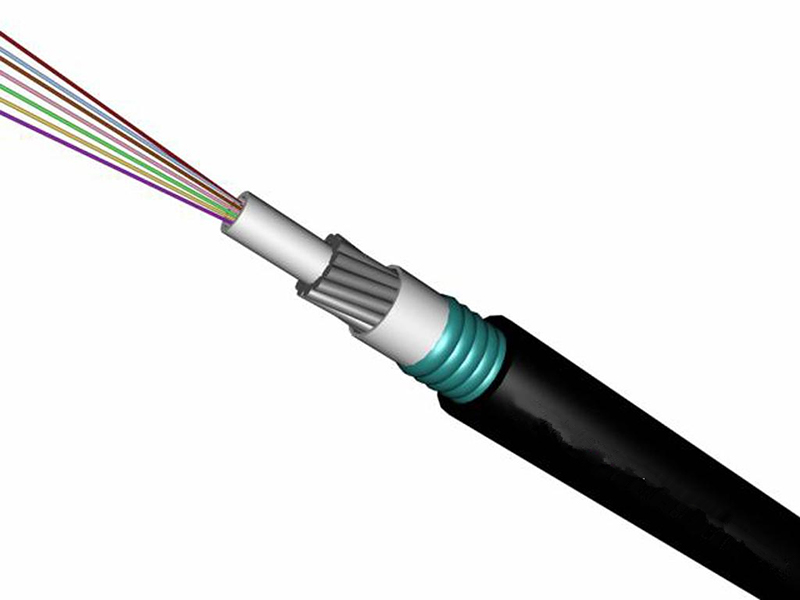
What GYXTS Means in an RFQ
GYXTS identifies a compact central loose tube outdoor cable family with steel tape protection. The final fiber count, tube dimensions, water-blocking arrangement, tape structure, sheath compound and mechanical values remain project-specific and must be confirmed in the offered drawing and datasheet.
The central tube changes how the cable is selected. It can be useful for lower-fiber-count outdoor routes, but it should not be treated as a substitute for a stranded loose tube cable when the project requires a different fiber capacity or construction. The RFQ should also state whether an aerial route uses lashing or another external support method.
Route and Construction Decision Table
| Decision area | What to define | Why it changes the RFQ |
|---|---|---|
| Installation route | Duct, conduit, outdoor access, aerial lashing or another confirmed route. | Standard GYXTS is not a self-supporting ADSS or Figure-8 cable. |
| Central tube | Tube material, fiber count, fiber arrangement and filling or water-blocking method. | Central-tube capacity and protection must match the required optical layout. |
| Steel tape | PSP or steel-polyethylene composite form, dimensions or project limits. | Protection and cable handling cannot be compared from the name alone. |
| Outer sheath | PE compound, color, thickness limits, UV requirement and marking. | Outdoor exposure and identification depend on the approved sheath requirements. |
| Support method | Lashing hardware, span or support spacing and installation procedure where aerial. | GYXTS does not provide the same self-supporting function as ADSS or Figure-8. |
GYXTS vs Related Outdoor Cable Families
| Family | Structural distinction to verify | RFQ decision |
|---|---|---|
| GYXTS | Central loose tube with steel tape or PSP protection and PE sheath. | Review for duct, outdoor access and aerial-lashed routes when the central tube fits. |
| GYXTW | Central tube cable with steel-polyethylene composite protection and strength members subject to design. | Compare the actual tube, tape, strength and sheath construction before substitution. |
| GYXTY | Central loose tube outdoor cable with PE sheath and a different protection arrangement. | Use the route and required mechanical protection to decide between central-tube families. |
| GYTS or GYTA | Stranded loose tube construction around a central strength member. | Review when the project needs a different fiber count, tube layout or backbone construction. |
| ADSS / Figure-8 | Self-supporting aerial construction with dielectric strength system or integrated messenger. | Do not use GYXTS as a self-supporting aerial substitute. |
The existing GYXTW specification guide explains why GYXTS, GYXTW and other central-tube designs must be compared by construction and route rather than by model suffix.
Ten Fields to Include in a GYXTS RFQ
| RFQ field | Information to state | Risk if omitted |
|---|---|---|
| Application | Duct, outdoor access or aerial-lashed route and the installation environment. | The offered protection or support assumption may be wrong. |
| Fiber | Fiber category, count, optical requirements and identification method. | The central tube may not match the required optical layout. |
| Tube construction | Tube material, dimensions, fiber arrangement and filling or water-blocking system. | Offers with the same model name may not be equivalent. |
| Steel tape | PSP or composite tape type, dimensions, overlap and project restrictions. | Mechanical protection and handling cannot be checked. |
| Sheath | PE material, color, nominal or minimum thickness, UV and marking requirements. | Outdoor suitability and identification remain unclear. |
| Aerial support | Lashing method, support spacing, hardware and installation procedure if aerial. | GYXTS may be incorrectly treated as self-supporting. |
| Mechanical tests | Tensile, crush, impact, bending, load condition and acceptance limits. | Unexplained numbers cannot support controlled acceptance. |
| Environmental tests | Temperature cycling, water penetration, UV and route-specific controls. | Long-term suitability and evidence requirements remain subjective. |
| Dimensions | Diameter, weight, bend radius, drum length and permitted tolerances. | Duct occupancy, lashing, drum planning and freight review may be wrong. |
| Delivery | Quantity, destination, packing, marking, documents and deviation schedule. | Quotation comparison and receiving inspection may be delayed. |
Evidence Before Approval
Do not accept a GYXTS offer merely because it says "complies with IEC." Name the applicable standard or project clause, test method, test condition, acceptance value, reporting format and permitted deviation. For aerial-lashed use, the cable requirement and the external support installation method should be reviewed together.
Central-tube review
Confirm fiber count, tube arrangement, fiber excess length, filling or dry water-blocking and the approved cross-section.
Route-support review
Define duct conditions or aerial lashing details. GYXTS is not ADSS and does not include the integrated support function of a Figure-8 design.
Mechanical review
Separate installation loads from operating loads. State duration, sample length, attenuation change and acceptance criteria where applicable.
Deviation control
Require alternative tape, sheath, test methods, tolerances and exclusions to be listed before order approval.
Copyable GYXTS RFQ Schedule
Product family: GYXTS central loose tube steel tape outdoor cable
Installation route: [duct / outdoor access / aerial lashing / other]
Fiber type and count: [complete]
Central tube and water-blocking design: [complete]
Steel tape or PSP structure: [complete]
Outer sheath: [material, color and thickness limits]
Aerial support method, if applicable: [complete]
Mechanical and environmental tests: [method, condition and acceptance value]
Cable diameter, weight and bend radius: [limits]
Drum length, marking and packing: [complete]
Quantity and destination: [complete]
Required documents and deviations: [complete]
Common GYXTS Purchasing Mistakes
- Calling GYXTS a self-supporting aerial cable because it is described as an outdoor cable.
- Assuming steel tape alone makes standard GYXTS suitable for direct burial.
- Comparing GYXTS with GYXTW, GYXTY or GYTS without checking the actual tube and protection structure.
- Leaving aerial lashing, support spacing, drum length and packing requirements out of the RFQ.
- Requesting fixed freight or a fixed product price before quantity, destination and construction are confirmed.
- Accepting test values without a named method and acceptance rule.
Frequently Asked Questions
What is GYXTS fiber optic cable?
GYXTS is an outdoor central loose tube fiber optic cable with steel tape or PSP protection and a PE outer sheath. The final fiber count and construction must be confirmed for the project.
Is GYXTS a self-supporting aerial cable?
No. Standard GYXTS is not ADSS or Figure-8 self-supporting cable. An aerial installation should define the external support or lashing design.
Can GYXTS be used for direct burial?
Do not select standard GYXTS for direct burial from the model name alone. Review the final design and project specification; double-sheath armored families may be more appropriate for demanding buried routes.
What should be confirmed before requesting a quotation?
Send the route, fiber type and count, central tube layout, steel tape structure, sheath, support method, tests, drum length, quantity, destination and document requirements.
Need a GYXTS RFQ Review?
Send the route, fiber requirements, central-tube construction, support method, tests, quantity, destination and document requirements. Final product and delivery terms should be confirmed for the specific project.
View GYXTS CableSend RFQ Details