
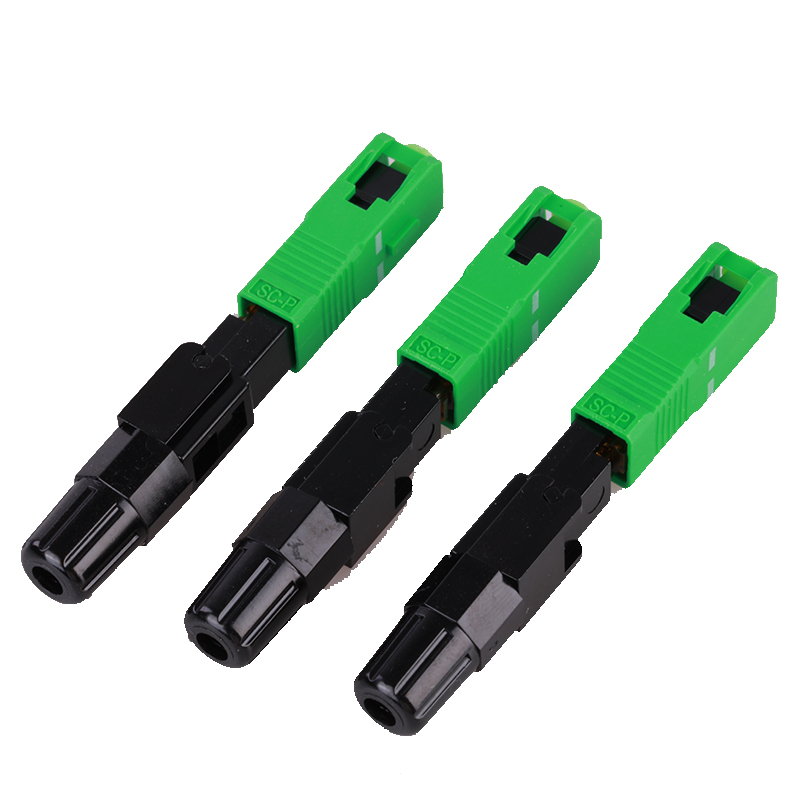
Fast Connector or Fusion Splice?
| Decision area | Review a fast connector when | Review fusion splicing when |
|---|---|---|
| Termination point | A prepared fiber must be connectorized at an FTTH access point, terminal box, wall outlet or maintenance location. | The fiber must be joined into a pigtail, tray, closure or distribution system. |
| Installation method | The approved field procedure covers fiber preparation, connector assembly and post-installation testing. | The project has a defined splice workflow, qualified equipment and protected splice storage. |
| Interface | The connector type and polish must match the adapter or equipment port. | The splice plan and the pigtail connector interface are confirmed separately. |
| RFQ risk | Cable diameter, fiber type, tools, preparation method and packaging are often missed. | Splice tray format, pigtail length, fiber count, closure space and test records are often missed. |
Four Problems That Cause Rework
- Choosing by connector name only. SC, LC or FC does not identify the required polish, fiber mode or mating interface. Confirm the equipment and adapter first.
- Ignoring cable compatibility. Fast connector models may support different fiber or cable diameters. Confirm compatibility before purchasing cartons of connectors.
- Using a field connector where the project requires a controlled splice. A fast connector is not a universal replacement for a splice-tray or closure workflow. Match the method to the approved installation and acceptance plan.
- Leaving testing until after delivery. State the installation check, optical test method, reporting format and sample or routine inspection requirement in the RFQ.
Fast Connector RFQ Checklist
| RFQ input | What to state | Why it matters |
|---|---|---|
| Connector interface | SC, LC or FC; UPC or APC; mating adapter or equipment port. | Prevents an interface or polish mismatch. |
| Fiber and cable | Single-mode or multimode; 250 um, 900 um, 2 mm, 3 mm or project-defined cable. | Confirms connector compatibility and installation method. |
| Application | FTTH terminal box, wall outlet, ONT/ONU connection, indoor distribution or maintenance. | Defines the field environment and handling requirement. |
| Installation and testing | Preparation procedure, tools, technician requirement, optical test method and acceptance rule. | Connects the product selection to site performance. |
| Commercial packing | Quantity, individual or bulk packaging, labels, tools and delivery destination. | Allows a reviewable quotation without inventing a fixed price or freight value. |
What to Confirm Before Site Acceptance
Before approving either method, keep the selected component, installation procedure and acceptance evidence aligned. Record the connector interface and polish for a fast connector, or the pigtail interface and splice-tray format for a fusion-splice workflow. The project file should also identify the compatible fiber or cable diameter, preparation method, optical test method, reporting format, packaging and the person responsible for final inspection.
- Interface: confirm the mating adapter, equipment port and UPC/APC requirement.
- Installation: confirm the supported fiber or cable construction, preparation tools and field procedure.
- Acceptance: confirm the optical test method, record format, sample or routine inspection scope and rejection rule.
- Commercial handoff: confirm quantity, packaging, labels and destination before requesting the quotation.
Related Selection Paths
Use the Fiber Optic Fast Connector product page for connector, polish, cable compatibility and RFQ configuration. For a field-by-field procurement schedule, use the fast connector RFQ checklist. If the requirement is a connectorized end for fusion splicing, review the Fiber Optic Pigtail product page. For the broader component decision, see the patch cord, pigtail, adapter and fast connector selection guide.
Frequently Asked Questions
When should an FTTH project use a fast connector instead of fusion splicing?
Review a fast connector when a prepared fiber must be terminated in the field and the approved access-network procedure supports it. Review fusion splicing when the project requires a controlled permanent splice, a splice-tray or closure workflow, or a test plan built around spliced fiber.
Can a fast connector and a pigtail be used in the same project?
Yes. A fast connector can serve a field termination point while a pigtail can provide a connectorized end that is fusion-spliced into a tray or closure. Confirm the connection point and method for each location.
Does SC/APC or SC/UPC depend only on connector color?
No. Match the polish to the mating adapter, equipment interface and approved network requirement. Confirm the interface in the project specification or equipment documentation.
What should I send for a fast connector RFQ?
Send connector type, polish type, fiber or cable diameter, fiber mode, application location, installation method, tools, test requirements, packaging and quantity.
Need help selecting a fast connector?
Send the connector interface, polish, fiber or cable diameter, application, installation method, quantity and packaging requirement. MapleArashi can review the configuration before quotation.
View Fast Connector OptionsSend RFQ Details