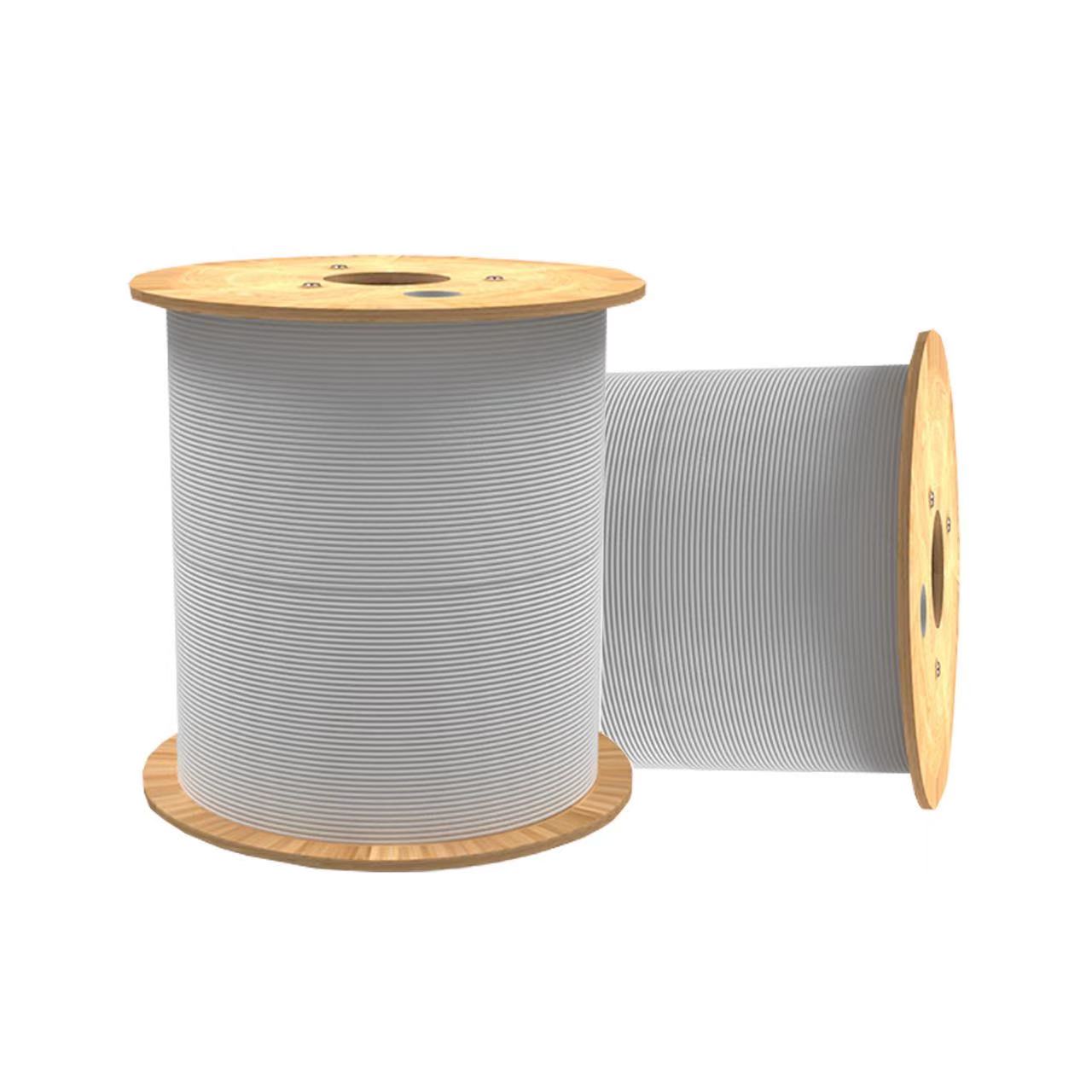
Indoor FTTH drop cable with parallel steel wire strength members for protected subscriber-side routing, building entry, and apartment distribution.
Round indoor FTTH drop cable with LSZH sheath for building riser and indoor distribution.
Fiber count, fiber type, sheath color, and connector type should be confirmed according to final cable design and project requirements.
Request Quote Download DatasheetProduct Answer
What is GJXH fiber optic cable?
GJXH is a round indoor FTTH drop cable with LSZH sheath, designed for indoor riser, building distribution, and apartment cabling with bend-insensitive G.657A2 fiber.
Compare GJXH with similar FTTH drop cable types.
| Requirement | GJXH (Round Indoor) | GJXFH (Flat Indoor) | GJYXCH (Aerial) |
|---|---|---|---|
| Shape | Round | Flat (bow) | Figure-8 |
| Sheath | LSZH | LSZH | PE/LSZH |
| Fiber count | 1–2 fibers | 1–2 fibers | 1–2 fibers |
| Installation | Indoor riser | Indoor routing | Indoor-outdoor |
| Best Pick | ★★★Indoor distribution | ★★★Flat routing | ★★★Aerial drop |
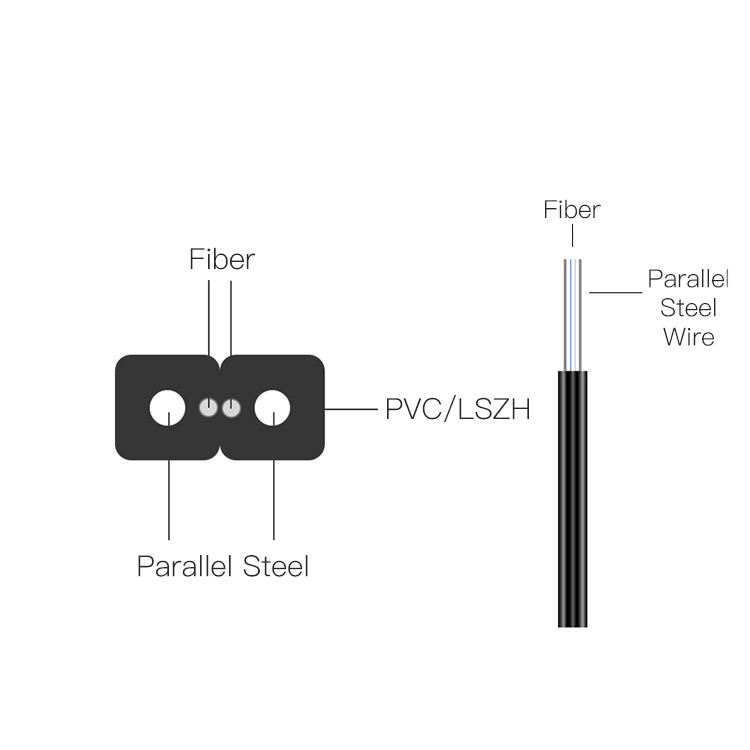
GJXH is an indoor FTTH drop cable with optical fiber in the center and parallel steel wire strength members on both sides. The LSZH sheath supports protected indoor routing inside buildings, apartments, and subscriber access paths.
| Layer | Component | Material / Function |
|---|---|---|
| 1 | Optical fiber | G.657A1 / G.657A2 / G.652D according to project requirement. |
| 2 | Strength member | Parallel steel wires for indoor tensile support. |
| 3 | Outer sheath | LSZH sheath for protected indoor routing. |
| 4 | Cable profile | Compact indoor drop cable profile for FTTH access routes. |
| Fiber Type | Typical Attenuation | Application Note |
|---|---|---|
| G.657A1 | ≤0.36 dB/km @1310nm; ≤0.22 dB/km @1550nm | Indoor FTTH routes where bend performance is required. |
| G.657A2 | ≤0.36 dB/km @1310nm; ≤0.22 dB/km @1550nm | Recommended for tighter indoor bends and subscriber-side routing. |
| G.652D | ≤0.36 dB/km @1310nm; ≤0.22 dB/km @1550nm | Available when project design requires standard single-mode fiber. |
Designed for protected subscriber-side routes inside buildings, apartments, and indoor distribution paths.
Parallel steel wires support cable pulling and route stability in indoor installation.
Low-smoke zero-halogen sheath supports indoor use where building safety requirements matter.
Small profile helps with wall routing, conduit paths, and customer-side access installation.
Compatible with G.657 series fibers for common indoor FTTH bend conditions.
Fiber count, fiber type, sheath color, packing length, and connector options can be confirmed per order.
| Model | Strength Member | Typical Use | Selection Note |
|---|---|---|---|
| GJXH | Parallel steel wires | Indoor FTTH drop routes | Use when indoor tensile support and compact routing are required. |
| GJXFH | Parallel FRP | Indoor dielectric drop routes | Use where a non-metallic indoor design is preferred. |
| GJXV | Steel wire / indoor drop design | Protected indoor subscriber routes | Confirm drawing and sheath requirement before selection. |
| GJYXCH | Messenger wire | Outdoor self-supporting FTTH access | Use for aerial drop routes requiring self-supporting installation. |
Protected indoor route from the distribution point to customer premises equipment.
Indoor routing for apartments, MDU buildings, and protected shared spaces.
Building-side indoor routing after the access cable enters the premises.
Short indoor connection between wall boxes, distribution boxes, and termination points.
Protected subscriber-side pathways where exposed outdoor performance is not required.
Used where the project drawing calls for compact indoor FTTH cable routing.
GJXH is the indoor choice when the subscriber-side route is protected and the approved design permits parallel steel strength members. Confirm that the cable will be installed after building entry or in another protected path, then verify the required fiber, LSZH sheath, cable profile, routing length, and termination method. Do not use the indoor designation alone to approve an exposed pole-to-building route.
The route is an indoor FTTH drop path and the drawing calls for compact cable construction with steel-wire tensile support.
A non-metallic indoor construction points to GJXFH; a self-supporting outdoor aerial section points to GJYXCH or GJYXFCH after the route and support requirement are confirmed.
Confirm the route boundary, steel-member requirement, fiber type, sheath requirement, marking, drum or coil length, and the connector or splice termination plan.
Configure the key requirement for GJXH Indoor FTTH Drop Cable. Select standard options or enter custom notes, then send your RFQ by WhatsApp or email.
Flat FTTH drop cable for indoor and access wiring.
Vertical FTTH drop cable for access network wiring.
FTTH drop cable for indoor access installation.
Self-supporting FTTH drop cable for aerial access.
FRP strength member FTTH drop cable for access networks.
FTTH drop cable for last-mile access networks.
Compare indoor and outdoor use, FRP or steel reinforcement, messenger design and route requirements.
Read the FTTH comparison guide →