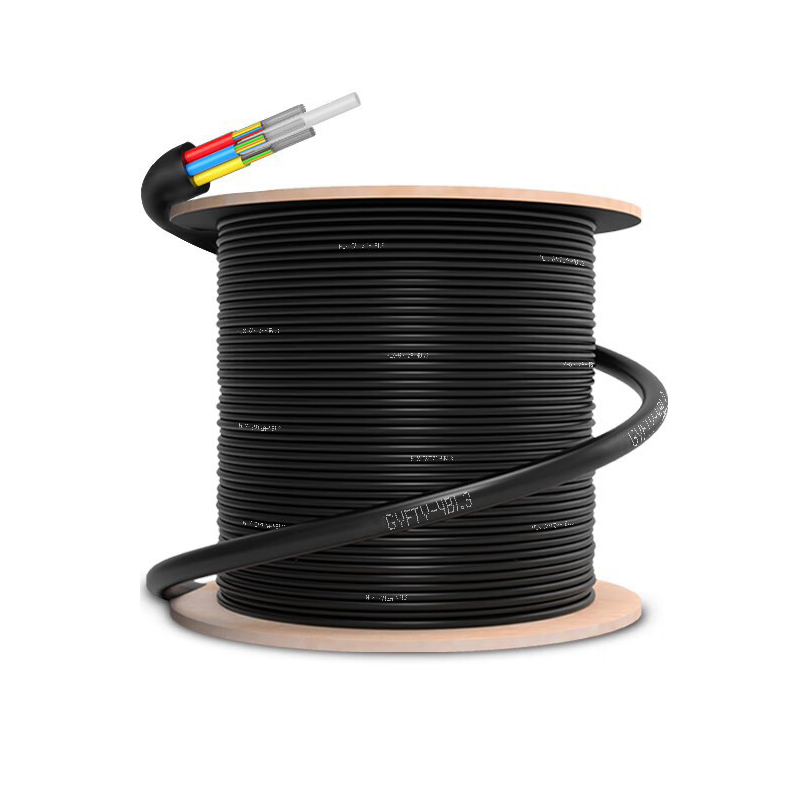
Non-metallic stranded loose tube outdoor fiber optic cable with a non-metallic central strength member for duct and aerial installations with external support, subject to final cable design.
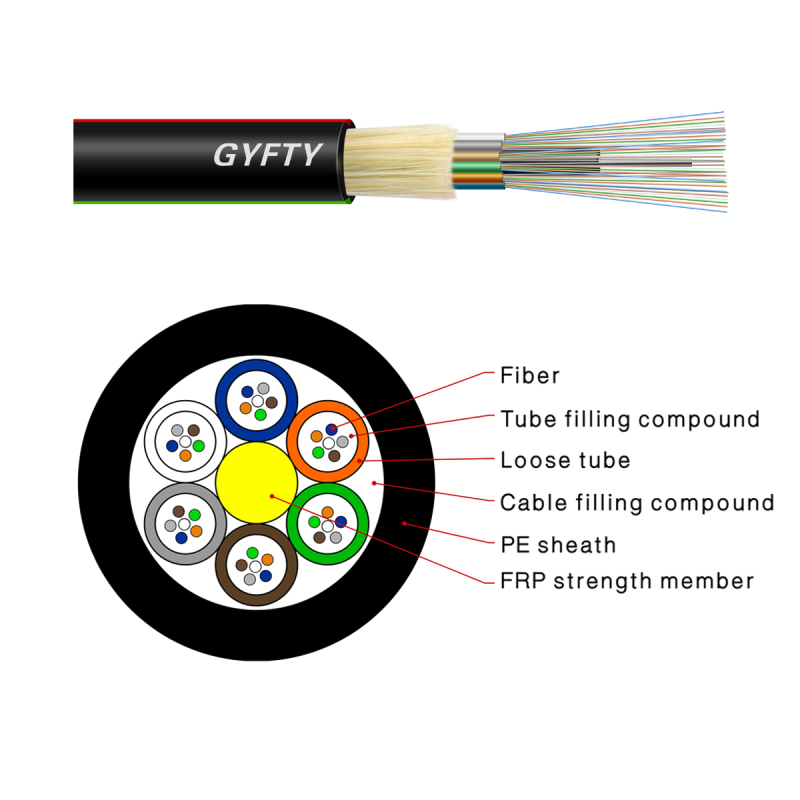
GYFTY is an outdoor stranded loose tube fiber optic cable designed for routes requiring a non-metallic central strength member and standard outdoor cable construction. A typical structure includes filled loose tubes, a stranded loose tube cable core around a non-metallic central strength member, water-blocking materials, and a PE outer sheath. Fiber type, fiber count, tube layout, sheath material, and mechanical performance must be confirmed against the final cable design and project requirements.
Request Quote Download DatasheetProduct Answer
What is GYFTY fiber optic cable?
GYFTY is a non-metallic stranded loose tube outdoor fiber optic cable. It uses a non-metallic central strength member, subject to final cable design, for duct and supported aerial routes where this construction is specified.
Compare GYFTY with similar cable types for your project.
| Requirement | GYFTY (Non-Metal) | GYTA (Aluminum Armor) | GYFTZY (LSZH) |
|---|---|---|---|
| Strength member | Non-metallic; confirm final design | Steel/FRP | Non-metallic; confirm final design |
| Armor | None | Aluminum tape | None |
| Sheath | PE | PE | LSZH (zero halogen) |
| Electrical consideration | Non-metallic CSM; confirm final construction | Metallic construction | Non-metallic CSM; confirm final construction |
| Best Pick | Routes requiring non-metallic CSM | Routes needing APL barrier | Routes requiring LSZH sheath |
Substations, power plants, electrified railway lines, and areas near high-voltage power cables where metallic components pose a risk.
All-dielectric duct and aerial-lashed connections for campus, hospital, and industrial park infrastructure.
Duct and aerial-lashed routes running parallel to or crossing power lines where non-metallic cable helps reduce interference.
Fiber routes along railway corridors, highways, and utility infrastructure where non-metallic cable is specified.
Duct and aerial-lashed feeder cables in FTTH networks where a non-metallic central strength member is specified.
Compare GYFTY with related outdoor cable types to choose the right cable for your project.
| Model | Cable Structure | Metallic / Non-Metallic | Typical Application & Selection Note |
|---|---|---|---|
| GYFTY | Stranded loose tube, non-metallic; FRP central strength member | Non-metallic central strength member; confirm final construction | Duct and aerial-lashed routes where non-metallic central strength member construction is specified. Exact structure depends on project requirements. |
| GYFXTY | Central loose tube, non-metallic | All-dielectric — no metallic components | Compact outdoor cable for duct and supported aerial routes where compact dielectric cable is needed. Confirm exact structure by project. |
| GYTS | Stranded loose tube, metallic armor | Steel tape / PSP armored — contains metallic components | Outdoor duct, backbone, metro access networks requiring crush and rodent protection. Not all-dielectric; choose when steel armor is required. |
| ADSS | Self-supporting all-dielectric; no metallic components | All-dielectric — self-supporting design for aerial spans | Aerial installations between utility poles or towers. Span length and sheath selection depend on project requirements. |
Final cable selection depends on project-specific requirements. Unconfirmed specifications should be confirmed with the manufacturer before ordering.
Configure the key requirement for GYFTY Non-Metallic Stranded Loose Tube Outdoor Fiber Optic Cable. Select standard options or enter custom notes, then send your RFQ by WhatsApp or email.
Non-metallic armored outdoor fiber optic cable.
APL moisture barrier stranded loose tube outdoor cable.
Steel tape armored stranded loose tube outdoor cable.
All-dielectric self-supporting aerial fiber optic cable.
Central tube figure-8 aerial fiber optic cable.
Non-metallic stranded loose tube outdoor fiber cable.
Use the procurement checklist to define non-metallic construction, fiber performance, tensile and environmental tests, drum requirements, documentation, and acceptance criteria.
Read the technical guide →Review non-metallic outdoor cable construction, route condition and quotation inputs before approving a cable design.