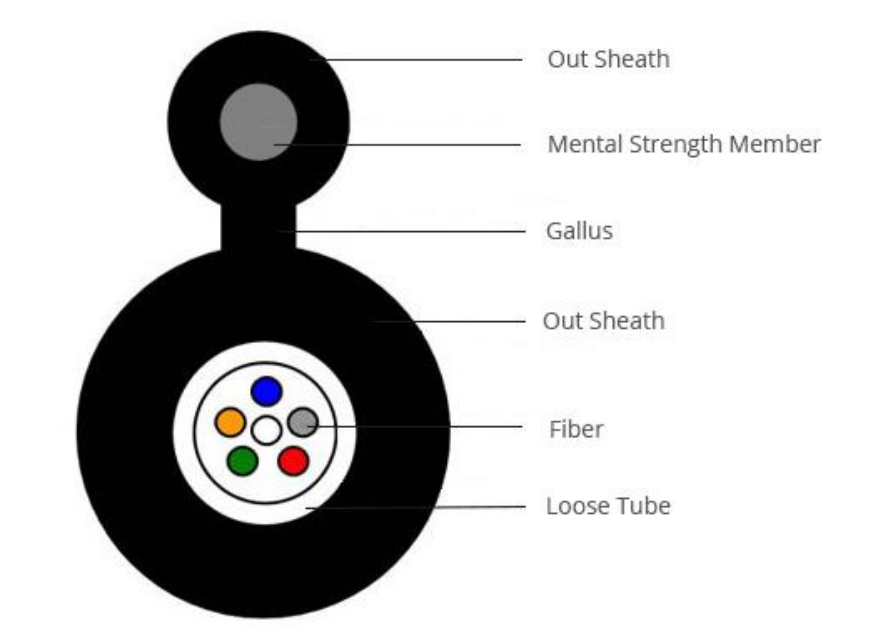
Outdoor figure-8 aerial fiber optic cable with a central loose tube core and an integrated metal messenger support element.
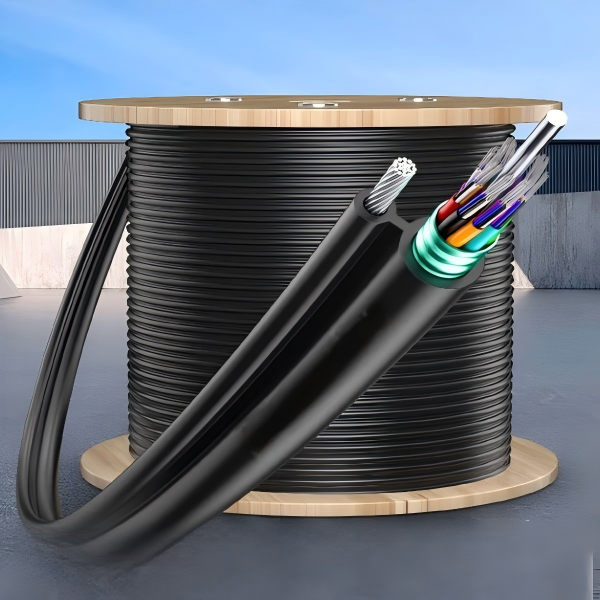
GYFXTC8Y is an outdoor figure-8 self-supporting fiber optic cable with a central loose tube cable core and an integrated metal messenger support element. The figure-8 profile combines the messenger and the cable core for efficient one-pass aerial installation along pole routes. It is not intended for direct burial, indoor FTTH drop cable use, or as a direct ADSS replacement. Span length, messenger type, sag, wind load, and installation tension should be confirmed by project design.
Request Quote Download DatasheetGYFXTC8Y fiber optic cable is a figure-8 outdoor aerial fiber optic cable for pole-route access, feeder, FTTx, and building-to-building communication links. It combines a central loose tube optical core with an integrated messenger support element for aerial installation. It should not be treated as a direct ADSS replacement unless the final cable structure and route design are confirmed.
Compare GYFXTC8Y with other figure-8 self-supporting cables to select the right design for your project.
| Requirement | GYFXTC8Y (Figure-8 Metal Messenger) | GYTC8S (Figure-8 Steel) | ADSS (All-Dielectric) |
|---|---|---|---|
| Messenger | Metal messenger; confirm final design | Steel wire | None (integral) |
| Metal content | Metal messenger | Steel wire | None |
| Electrical consideration | Confirm route requirement | Metal messenger | All-dielectric construction |
| Span and loading | Confirm project design | Confirm project design | Confirm project design |
| Best Pick | Figure-8 aerial routes | Steel-messenger routes | ADSS aerial routes |
| Product model | GYFXTC8Y |
|---|---|
| Cable structure | Figure-8 aerial cable with central loose tube optical core and integrated messenger support element |
| Messenger / support element | Metal messenger or customized support element according to project requirements |
| Water blocking | Tube filling compound and water-blocking material according to final cable design |
| Outer sheath | PE, HDPE, or customized outdoor jacket |
| Typical application | Outdoor aerial access, feeder, FTTx, campus, and building-to-building links |
| Fiber Type | Typical Attenuation at 1310 nm | Typical Attenuation at 1550 nm | Notes |
|---|---|---|---|
| G.652.D | ≤ 0.36 dB/km | ≤ 0.22 dB/km | Common single-mode fiber for outdoor aerial networks. |
| G.657.A1 / A2 | ≤ 0.36 dB/km | ≤ 0.22 dB/km | Bend-insensitive options available by request. |
Values are typical references. Final optical parameters should be confirmed by datasheet, fiber brand, and project specification.
Figure-8 aerial deployment along pole routes for access and distribution.
Self-supporting aerial routing for feeder and access links across pole spans.
Suburban and rural aerial deployment for last-mile and feeder projects.
Aerial communication links across campus and enterprise environments.
Outdoor aerial connections between buildings where a figure-8 route is preferred.
Use this comparison to decide whether GYFXTC8Y or another outdoor cable structure better fits the route requirements.
Figure-8 aerial fiber optic cable with integrated messenger support.
Central tube figure-8 aerial cable option for compact outdoor routes.
All-dielectric self-supporting aerial cable without metallic messenger.
Central loose tube outdoor cable with steel tape protection.
Configure the key requirement for GYFXTC8Y Figure-8 Fiber Optic Cable Supplier. Select standard options or enter custom notes, then send your RFQ by WhatsApp or email.
Figure-8 aerial cable with steel messenger for outdoor self-supporting routes.
Central loose tube figure-8 aerial cable with steel messenger support.
Stranded loose tube figure-8 aerial fiber cable with steel messenger.
All-dielectric self-supporting aerial cable for routes requiring ADSS design.
Central loose tube outdoor fiber optic cable for access and aerial-related networks.
Non-metallic loose tube outdoor fiber optic cable for aerial and duct applications.
Compare ADSS and Figure-8 cable by route support, span and installation conditions before approving a cable design.