Get Quote
HomeAboutProductsSolutionsPartnersInsightsContact
Home/Products/Outdoor Cables/GYDTA53 Armored Ribbon Fiber Optic Cable

GYDTA53 Armored Stranded Loose Tube Ribbon Fiber Optic Cable

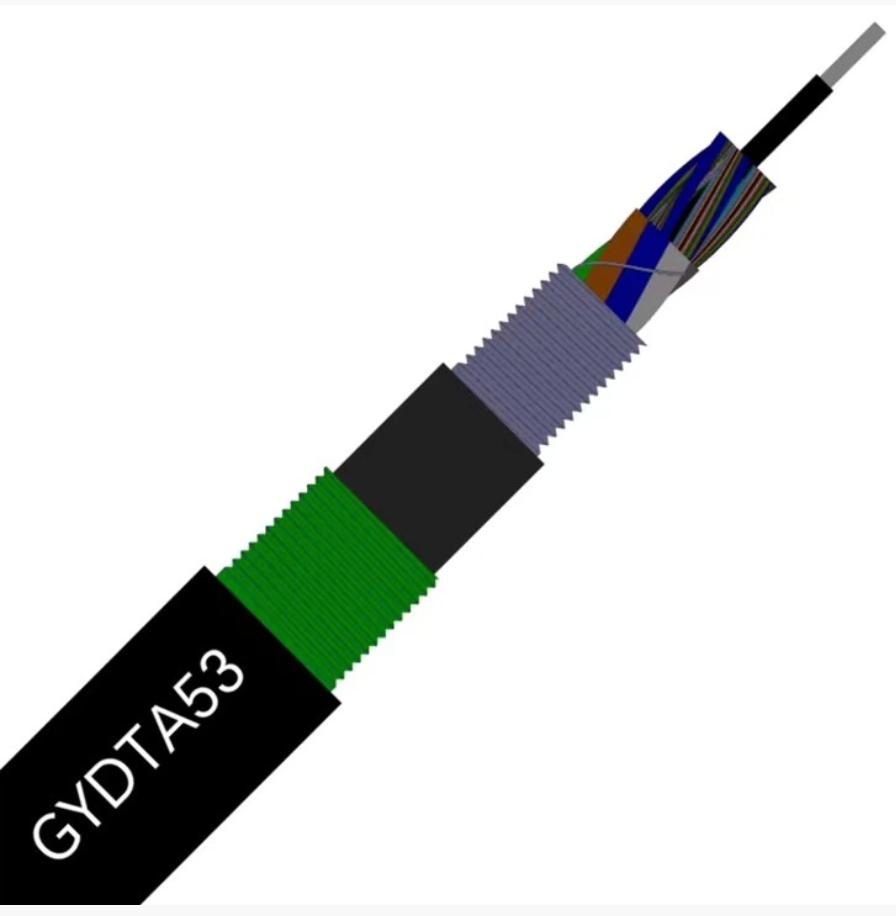
Armored stranded loose tube ribbon fiber optic cable with APL (aluminum-polyethylene laminated tape) moisture barrier, metallic central strength member (steel wire), corrugated steel tape/PSP armor with double PE sheath for direct burial and harsh outdoor routes requiring high fiber density.

Ribbon Fiber Armored APL Moisture Barrier Double PE Sheath Metallic CSM
GYDTA53 Armored Ribbon Fiber Optic Cable
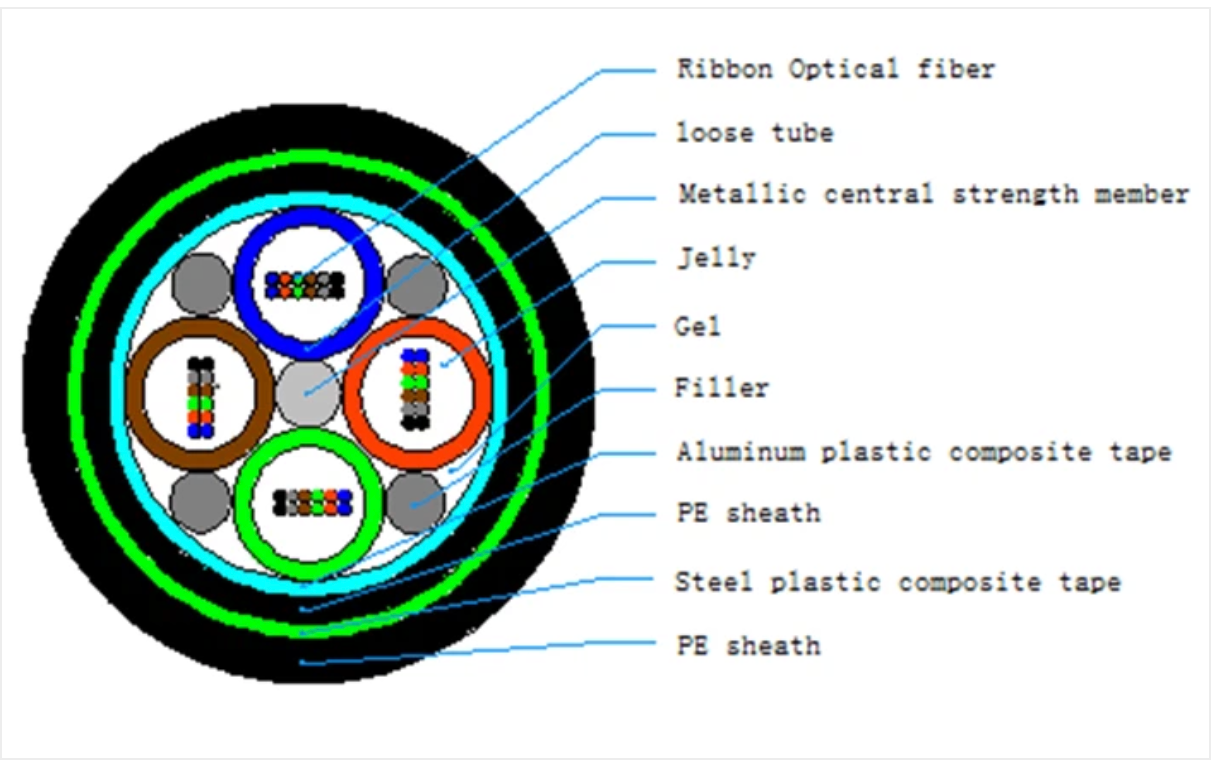
GYDTA53 structure diagram

Product Overview

GYDTA53 is an armored stranded loose tube ribbon fiber optic cable featuring an APL aluminum-polyethylene moisture barrier, an inner PE sheath, corrugated steel tape (PSP) armor, and an outer PE sheath. This multi-layer design delivers moisture resistance and enhanced mechanical protection for high-density direct burial and outdoor backbone trunk routes. The ribbon fiber structure enables significantly higher fiber density compared to standard loose tube cables. Final fiber count, ribbon configuration, and cable dimensions depend on the project specification.

Request Quote Download Datasheet

Product Answer

What is GYDTA53 fiber optic cable?
GYDTA53 fiber optic cable is an armored stranded loose tube ribbon fiber optic cable with APL moisture barrier, metallic central strength member (steel wire), corrugated steel tape or PSP armor, and a double PE sheath. It is designed for direct burial, harsh outdoor routes, and high-density backbone projects where ribbon fiber mass splicing and mechanical protection are both required. MapleArashi manufactures GYDTA53 with up to 288 fibers, G.652D or G.657 fiber types.

Quick Selection Guide

Compare GYDTA53 with other armored outdoor fiber cables to select the right design for your project.

RequirementGYDTA53 (Ribbon, APL, Armored)GYDTS53 (Ribbon, Steel Tape, Armored)GYDTA (Ribbon, APL)GYDTS (Ribbon, Steel Tape)
Fiber typeRibbon (max 288F)Ribbon (max 288F)Ribbon (max 288F)Ribbon (max 288F)
Moisture barrierAPL tapeWater-blocking onlyAPL tapeWater-blocking only
ArmorSteel tape (PSP)Steel tape (PSP)NoneCorrugated steel tape
SheathDouble PEDouble PESingle PESingle PE
Best forDirect burial, harsh routesHarsh direct burialBackbone/metro ductDuct with rodent risk
Best Pick★★★Direct burial with moistureHarsh direct burialBackbone/metro ductDuct with rodent risk

Key Takeaways

  • GYDTA53 combines GYDTA ribbon fiber technology with 53 armor structure (corrugated steel tape + double PE sheath) for direct burial with high fiber density.
  • Ribbon fiber enables mass fusion splicing up to 12 fibers per splice, ideal for high-density backbone projects requiring fast deployment.
  • APL moisture barrier + steel tape armor + double PE sheath provides maximum radial moisture and mechanical protection.
  • Available with G.652D, G.657A1, or G.657A2 fiber types; up to 288 fibers in ribbon configurations.
  • Not suitable for all-dielectric or EMI-sensitive environments due to metal CSM and armor. For non-metallic, consider GYFTA or GYFTY.

Citable Specification Notes

  • Operating temperature: Confirm the required range in the approved datasheet and project specification.
  • Bend radius: Confirm installation and operating limits against the final cable diameter and approved datasheet.
  • Fiber count: Confirm ribbon count, tube layout, and final fiber count in the RFQ.
  • Mechanical performance: State the required crush, tensile, and acceptance criteria in the project specification.

Product-Specific Structure

Confirmed specifications for GYDTA53 Armored Ribbon Fiber Optic Cable

LayerComponentMaterial / Function
1Optical FiberRibbon fibers (12-fiber ribbons or per project requirement)
2Loose TubesFilled PBT loose tubes stranded around CSM
3Tube FillingWater-blocking filling compound
4Core FillingWater-blocking material in cable core interstices
5Central Strength MemberMetallic central strength member, subject to final cable design
6Core WrappingWater-blocking tape / binder
7Moisture BarrierAPL (aluminum-polyethylene laminated tape)
8Inner SheathPE (polyethylene)
9ArmorCorrugated steel tape / PSP (steel-polyethylene laminated tape)
10Outer SheathPE (polyethylene)

General Optical Performance

Confirm optical acceptance values, mechanical requirements, and applicable standards against the final cable design and project specification.

ParameterRequirement to Confirm
Attenuation @ 1310 nmConfirm the fiber category and acceptance limit in the project specification.
Attenuation @ 1550 nmConfirm the fiber category and acceptance limit in the project specification.
Operating TemperatureConfirm installation, operating, storage, and transport ranges in the approved datasheet.
Mechanical PerformanceConfirm tensile, crush, impact, and bend requirements for the route and installation method.
StandardsState the applicable project standard, test method, and acceptance requirement in the RFQ.
DocumentationCompliance documentation available upon request when required by the project specification.

Key Features

  • Ribbon Fiber Technology
    Mass fusion splicing enables simultaneous splicing of 12 or 24 fibers, reducing installation time and splice cost in high-count backbone networks.
  • APL Moisture Barrier
    Aluminum-polyethylene laminated sheath provides moisture protection and additional radial mechanical strength for outdoor duct and backbone routes.
  • High Fiber Density
    Ribbon fiber in stranded loose tube design maximizes fiber count per cable cross-section, ideal for space-constrained duct routes.
  • Fast Installation
    Ribbon fiber cable supports mass fusion splicing for faster backbone deployment compared to individual fiber splicing.
  • Future-Ready Capacity
    High fiber-count ribbon design provides room for network capacity expansion without additional cable installation.
  • Standards Compliance
    Compliance documentation available upon request for relevant standards.

Application Scenarios

Backbone Network

Long-haul and regional backbone routes where high fiber count and efficient splicing are required.

Metro Network

Metropolitan area network duct infrastructure for telecom operators requiring high fiber-density ribbon cables.

Access Network

Feeder and distribution segments in operator access networks where future capacity growth is expected.

Data Center Interconnect

High-count ribbon trunk cable between data center facilities in duct infrastructure.

FTTx Feeder

High-capacity feeder cable from central office or OLT to distribution cabinets in FTTH and FTTB networks.

Model Comparison

Compare GYDTA53 with similar armored ribbon fiber and outdoor cable models to select the right cable for your project.

D5

GYDTA53

Ribbon, Armored

  • CSM: Steel / FRP
  • Moisture: APL aluminum tape
  • Armor: Steel tape
  • Install: Direct burial, duct
  • Sheath: Double PE
Best for: Ribbon fiber direct burial w/ armor
DA

GYDTA

Ribbon, Non-Armored

  • CSM: Steel / FRP
  • Moisture: APL aluminum tape
  • Armor: None
  • Install: Duct, outdoor
  • Sheath: Single PE
Best for: Ribbon fiber outdoor duct w/ APL barrier
A5

GYTA53

Stranded, Armored

  • CSM: Steel wire (metallic)
  • Moisture: APL aluminum tape
  • Armor: Steel tape + outer PE
  • Install: Direct burial, duct
  • Sheath: Double PE
Best for: Stranded tube armored for direct burial
TA

GYTA

Stranded, Non-Armored

  • CSM: Steel wire (metallic)
  • Moisture: APL aluminum tape
  • Armor: None
  • Install: Duct, outdoor
  • Sheath: Single PE
Best for: Standard outdoor duct w/ APL barrier

GYDTA53 Cable Configurator

Configure the key requirement for GYDTA53 Armored Stranded Loose Tube Ribbon Fiber Optic Cable. Select standard options or enter custom notes, then send your RFQ by WhatsApp or email.

Ribbon Fiber Cable Selection

Compare GYDTA, GYDTS, GYDTA53 and GYDTS53 by route, armor, sheath construction, fiber density and RFQ requirements before approving a cable design.

Read the ribbon fiber cable selection guide

FAQ About GYDTA53 Armored Ribbon Fiber Optic Cable

Q1: What is the difference between GYDTA53 and GYDTS?
GYDTA53 uses a ribbon fiber structure with inner PE sheath and steel tape (PSP) armor between inner and outer PE sheaths. GYDTS uses individual loose tube fiber structure with corrugated steel tape armor under a single PE sheath. GYDTA53 offers higher fiber density through ribbon technology and provides double-layer mechanical protection. GYDTS offers standard armoring for loose tube fiber designs. The choice depends on fiber count requirements and installation conditions.
Q2: Is GYDTA53 suitable for direct burial?
Yes, GYDTA53 is designed for direct burial installation. The steel tape (PSP) armor between inner and outer PE sheaths provides enhanced crush resistance and rodent protection required for direct buried outdoor backbone routes. For lighter duct-installation only applications, non-armored ribbon cable GYDTA may be considered depending on project specifications.
Q3: What is the advantage of ribbon fiber in GYDTA53?
Ribbon fiber allows mass fusion splicing, where 12 or 24 fibers can be spliced simultaneously. This significantly reduces installation time, splice cost, and cabinet space compared to individual fiber splicing in high-count backbone networks. Ribbon structure also enables higher fiber density per cable diameter.
Q4: What fiber counts does GYDTA53 support?
GYDTA53 supports high fiber counts through ribbon fiber technology, commonly available from 12 to 288 fibers depending on ribbon count, tube layout, and project specification. Please confirm the required fiber count and ribbon configuration with the project specification.
Q5: Can I get custom drum lengths?
Yes. Standard drum lengths 2-4 km. Custom lengths, packaging, sheath marking, and labeling available on request.
Q6: What installation methods are suitable for GYDTA53?
GYDTA53 is suitable for direct burial outdoor backbone and trunk routes, duct installation requiring enhanced mechanical protection, metropolitan area network (MAN) feeder cables, high fiber-count interconnect links, and high rodent-pressure outdoor environments. It is not designed for self-supporting aerial installation (consider ADSS or Figure-8 cable options). Please confirm the installation method and environment with the project specification.

Related Products