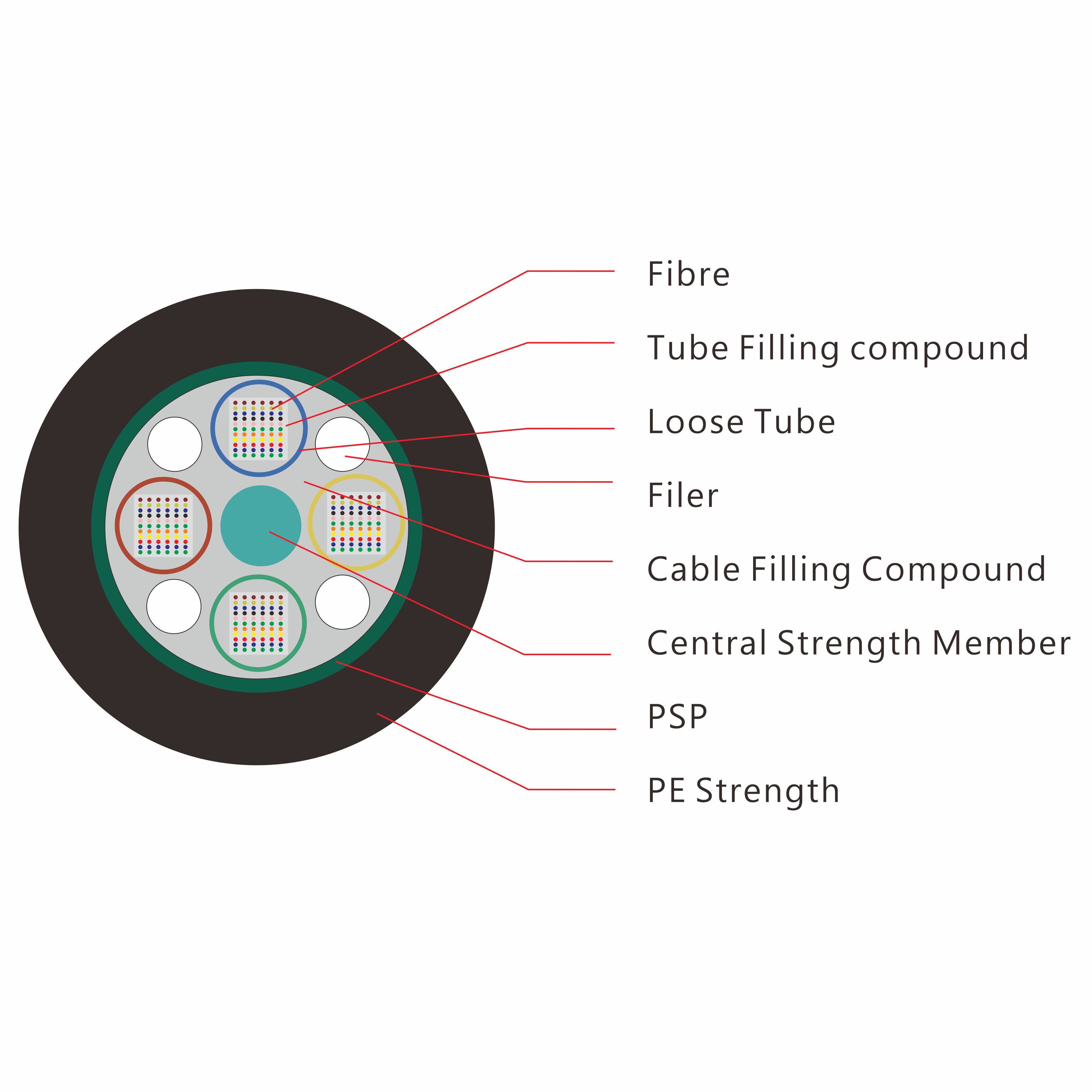
Stranded loose tube ribbon fiber optic cable with corrugated steel tape/PSP armor, metallic central strength member (steel wire), and PE sheath for backbone, metro, and data center trunk routes requiring rodent and crush protection.
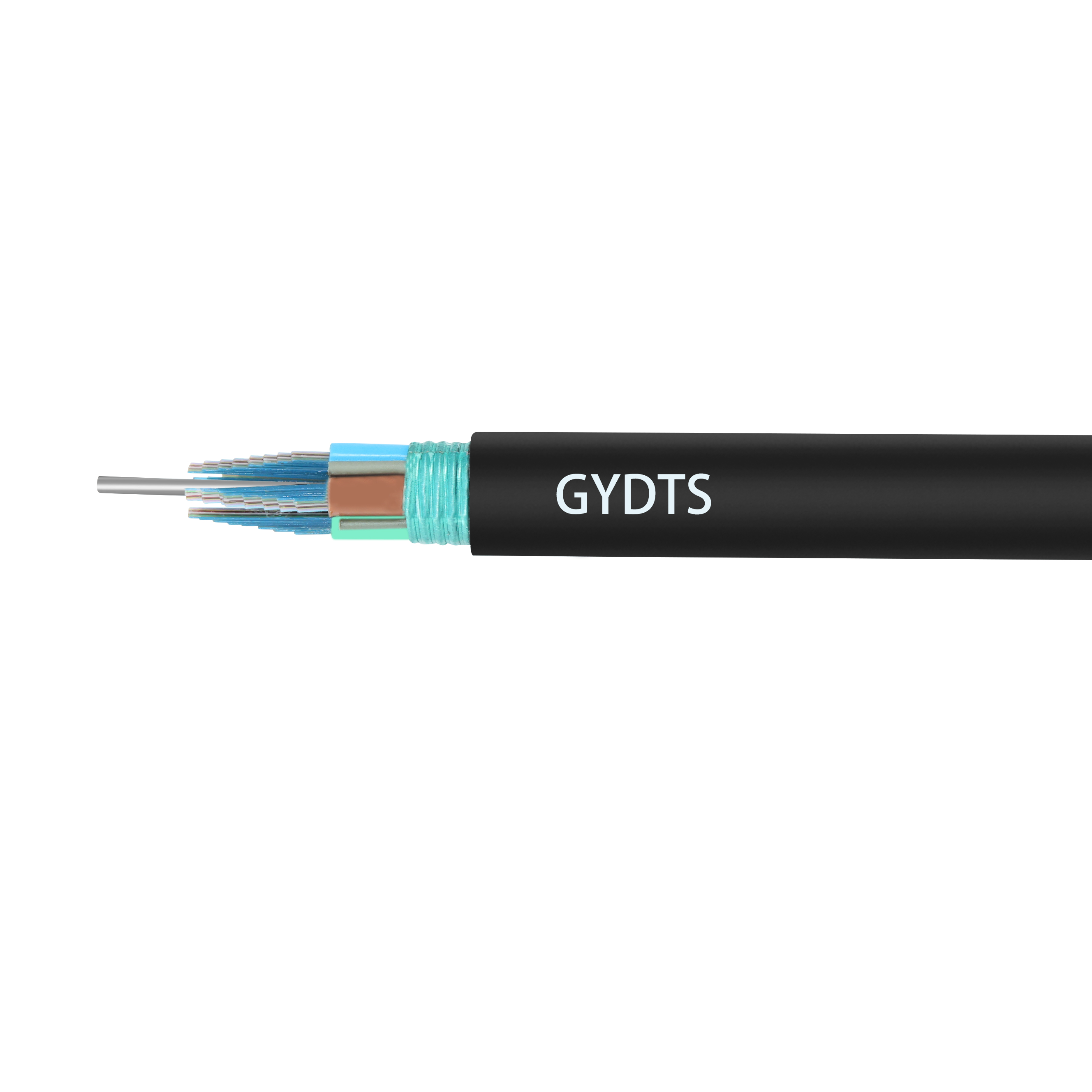
GYDTS is a stranded loose tube ribbon fiber optic cable with corrugated steel tape armor / PSP (Plastic-Laminated Steel Tape) and a PE outer sheath. It is designed for high-density outdoor duct, backbone, and metro network applications where ribbon fiber technology enables efficient splicing and where enhanced mechanical protection from steel tape armor is required. The steel tape layer provides mechanical, crush, and rodent protection, while the PE sheath and water-blocking structure support outdoor moisture resistance. Final fiber count, tube configuration, and cable dimensions depend on the project specification.
Request Quote Download DatasheetProduct Answer
What is GYDTS fiber optic cable?
GYDTS fiber optic cable is a stranded loose tube ribbon fiber optic cable with corrugated steel tape or PSP armor, a metallic central strength member (steel wire), and a PE outer sheath. It is designed for high-density backbone, metro, and data center trunk routes where ribbon fiber splicing and moderate rodent/crush protection are required. MapleArashi manufactures GYDTS cables with up to 288 fibers, G.652D or G.657 fiber types, and customizable options.
Compare GYDTS with other armored outdoor cables to select the right design for your project.
| Requirement | GYDTS (Ribbon, Steel Tape) | GYDTA (Ribbon, APL) | GYDTA53 (Ribbon, Armored) | GYDTS53 (Ribbon, Double Armor) |
|---|---|---|---|---|
| Fiber type | Ribbon (max 288F) | Ribbon (max 288F) | Ribbon (max 288F) | Ribbon (max 288F) |
| Moisture barrier | Water-blocking only | APL tape | APL tape | Water-blocking only |
| Armor | Corrugated steel tape | None | Corrugated steel tape | Corrugated steel tape |
| Sheath | Single PE | Single PE | Double PE | Double PE |
| Best for | Duct with rodent risk | Backbone/metro duct | Direct burial | Harsh direct burial |
| Best Pick | ★★★Duct with rodent risk | Backbone/metro duct | Direct burial | Harsh direct burial |
Typical values for reference. Final cable parameters depend on fiber count, ribbon layout, steel tape / PSP structure, PE sheath, strength member, and customer specification.
| Parameter | Typical Value |
|---|---|
| Attenuation @ 1310 nm | Typical value for reference only; final spec subject to cable design and project requirements |
| Attenuation @ 1550 nm | Typical value for reference only; final spec subject to cable design and project requirements |
| Operating Temperature | Subject to final cable design and project requirements |
| Storage Temperature | Subject to final cable design and project requirements |
| Standards | IEC 60794, ITU-T G.652/G.657 |
Long-haul and regional backbone routes where high fiber count and armored protection for duct infrastructure are required.
Metropolitan area network duct routes where steel tape armored ribbon cable is specified for protection against rodents and construction activity.
Feeder and distribution segments in operator access networks requiring mechanical protection for ongoing reliability.
High-count armored ribbon trunk cable between data center facilities in shared duct infrastructure.
High-capacity armored feeder cable from central office or OLT to distribution cabinets in FTTH and FTTB networks.
Compare GYDTS with related outdoor cable designs before confirming project requirements.
Structure: Stranded loose tube ribbon fiber cable with steel tape / PSP armor.
Typical Use: Outdoor duct backbone, metro, and high-density trunk routes requiring ribbon fiber and mechanical protection.
Selection Note: Choose GYDTS when ribbon fiber splicing efficiency and steel tape protection are required; final design depends on project requirements.
Structure: Ribbon fiber cable with APL moisture barrier design.
Typical Use: Outdoor backbone routes where moisture barrier performance is required without steel tape armor.
Selection Note: Use GYDTA when APL moisture protection is preferred and project conditions do not require GYDTS steel tape protection.
Structure: Reinforced 53-type ribbon cable design for stronger external protection.
Typical Use: More demanding outdoor routes, direct-burial-oriented projects, or higher mechanical protection requirements.
Selection Note: Confirm sheath, armor, and burial requirements according to the project specification.
Structure: Stranded loose tube steel tape armored outdoor cable.
Typical Use: Standard outdoor duct or backbone routes requiring steel tape protection but not ribbon fiber design.
Selection Note: Choose GYTS when standard loose tube steel tape armored cable is sufficient.
Configure the key requirement for GYDTS Stranded Loose Tube Ribbon Fiber Optic Cable with Steel Tape Armor. Select standard options or enter custom notes, then send your RFQ by WhatsApp or email.
Compare GYDTA, GYDTS, GYDTA53 and GYDTS53 by route, armor, sheath construction, fiber density and RFQ requirements before approving a cable design.
Outdoor fiber cable for duct and backbone deployment.
Armored outdoor cable for direct burial installation.
Armored outdoor cable for harsh environments.
Non-metallic stranded loose tube outdoor fiber cable.
Non-metallic loose tube outdoor cable.
Central tube outdoor cable for access and backbone networks.